Enantiostyly
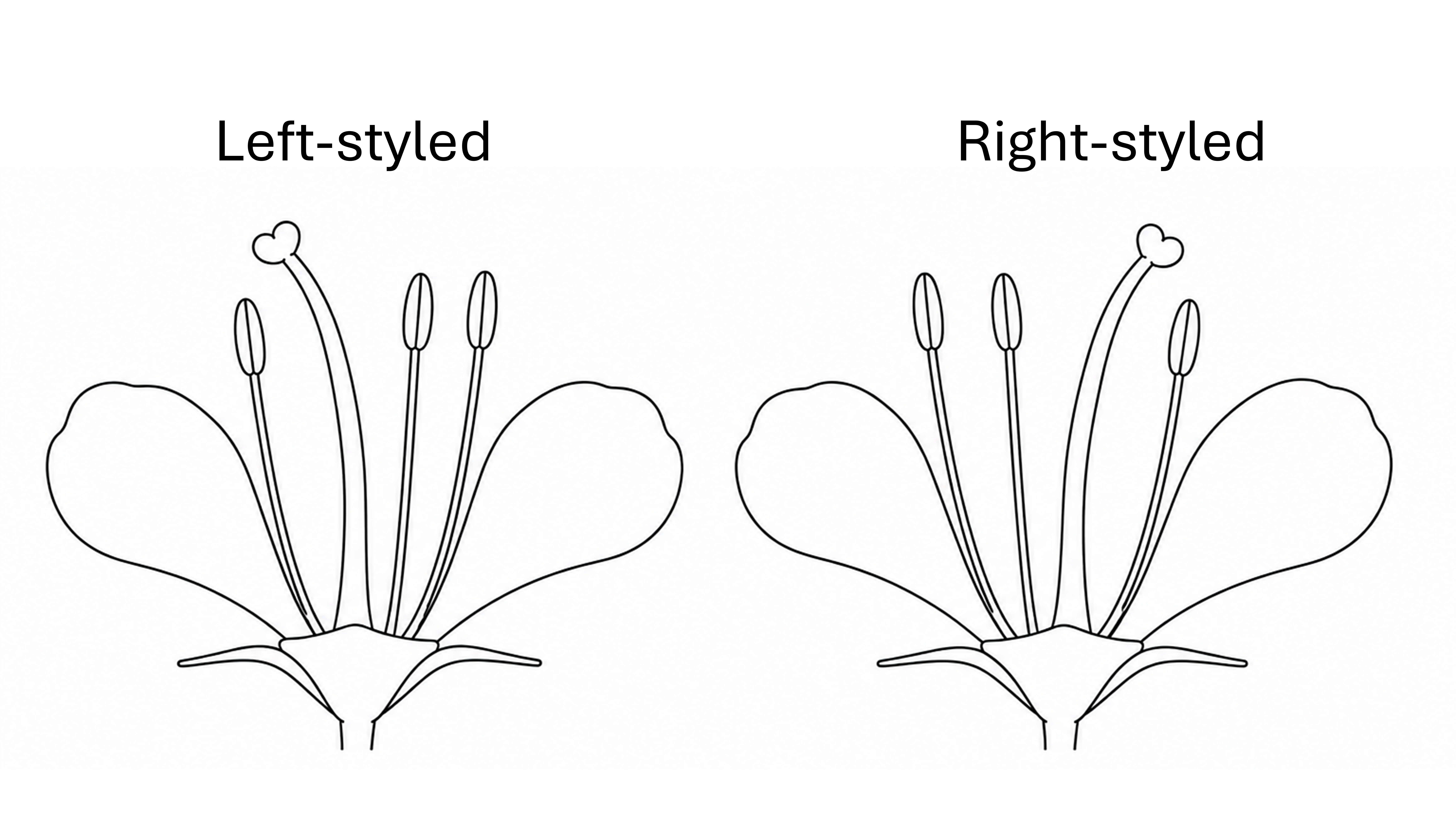
Enantiostyly is a type of floral polymorphism, where the style of a flower is either deflected to the left or to the right, resulting in mirror-image flowers. This trait is rare and can be found in less than 3% of angiosperm species. Most of the species with mirror-image flowers are monomorphic, i.e. they produce both left and right flowers on the same plant. But there are seven enantiostylous species which are dimorphic, meaning that each individual only produces one type of flower. Of these, the four species in the genus Wachendorfia as well as Barberetta aurea are endemic to South Africa.
Pollen movement
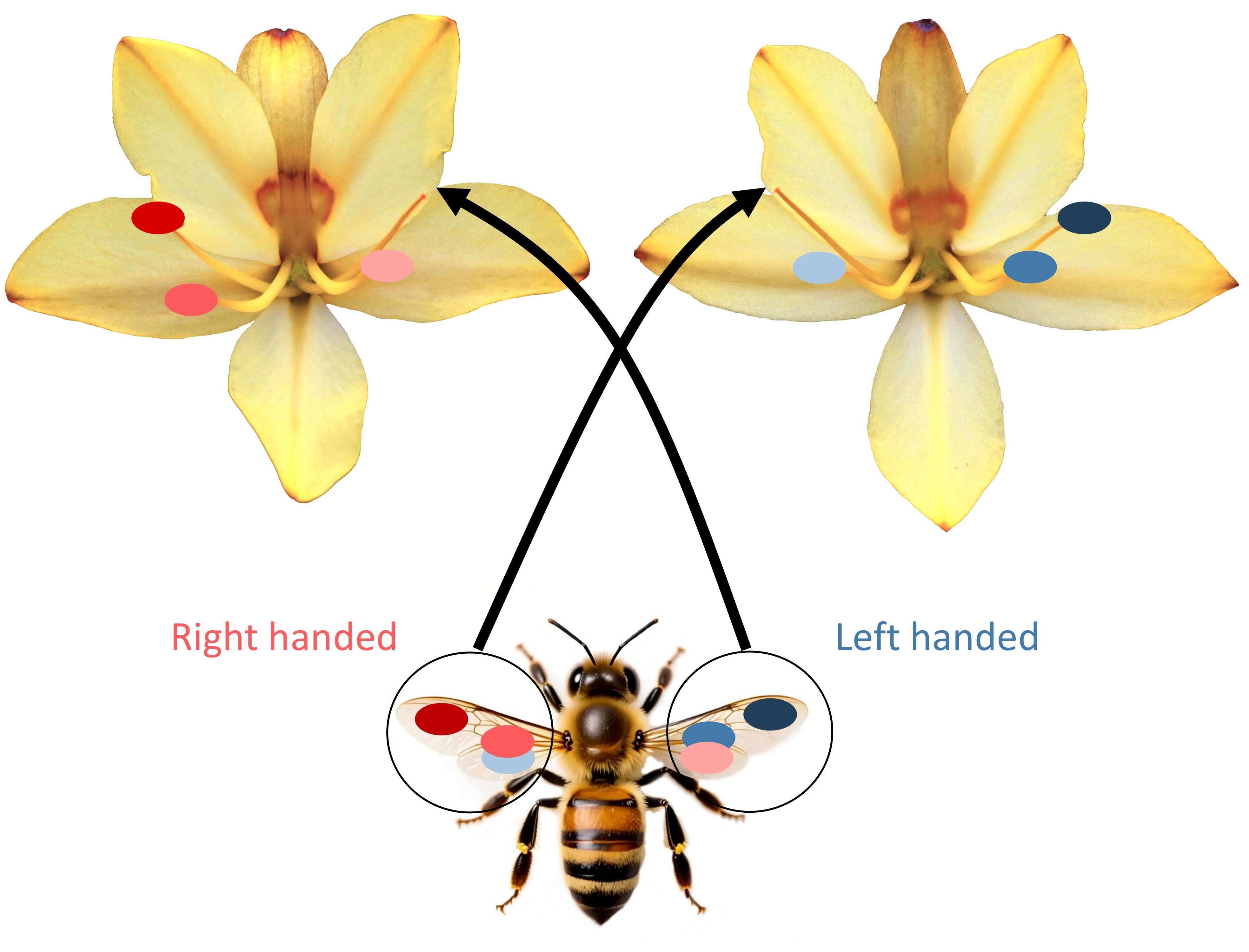
In Wachendorfia paniculata and other enantiostylous plants right-handed flowers place most of their pollen on the left side of the pollinator, which will be contacted by left-handed stigmas while the majority of left-handed pollen is exported to right-handed stigmas. This leads to disassortative pollen movement, which increases cross-pollination and reduces self-pollination, even if a pollinator visits many flowers per plant.
Negative frequency-dependent selection
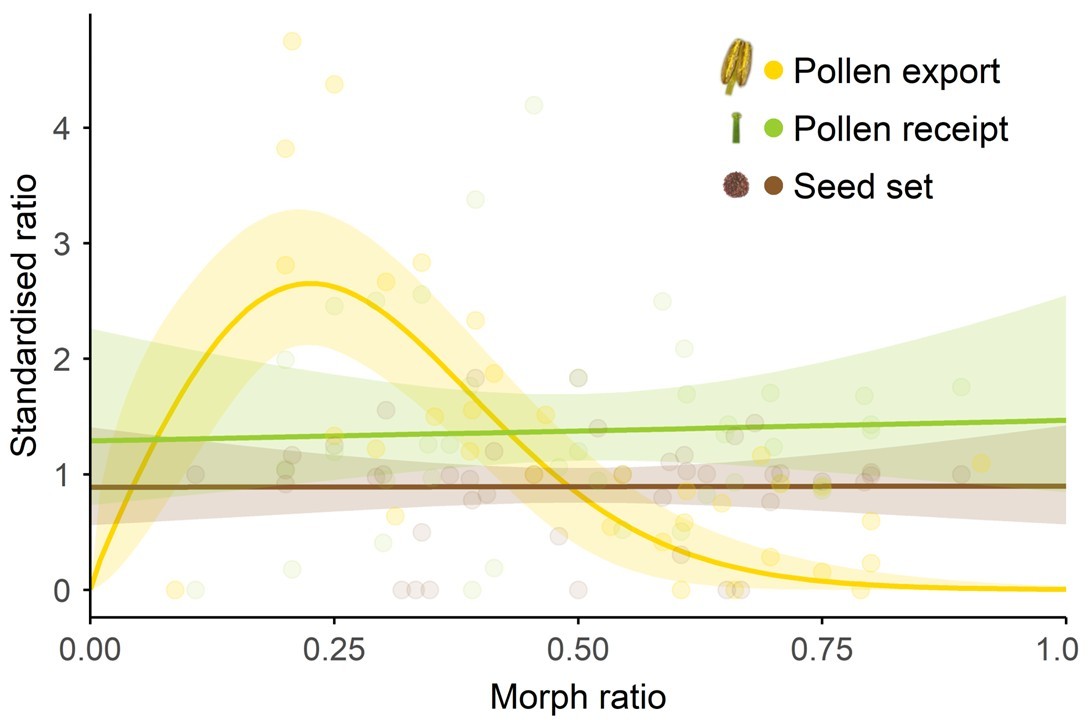
Most populations of Wachendorfia paniculata have equal morph ratios between left-handed and right-handed plants. But when one of the morphs becomes rare, it has more opportunities for pollen export to potential mates. This increase in pollen export leads to negative frequency-dependent selection, i.e. the rare morph sires more offspring and has a selective advantage. This maintains both morphs in equilibrium with each other.
Breakdown of enantiostyly
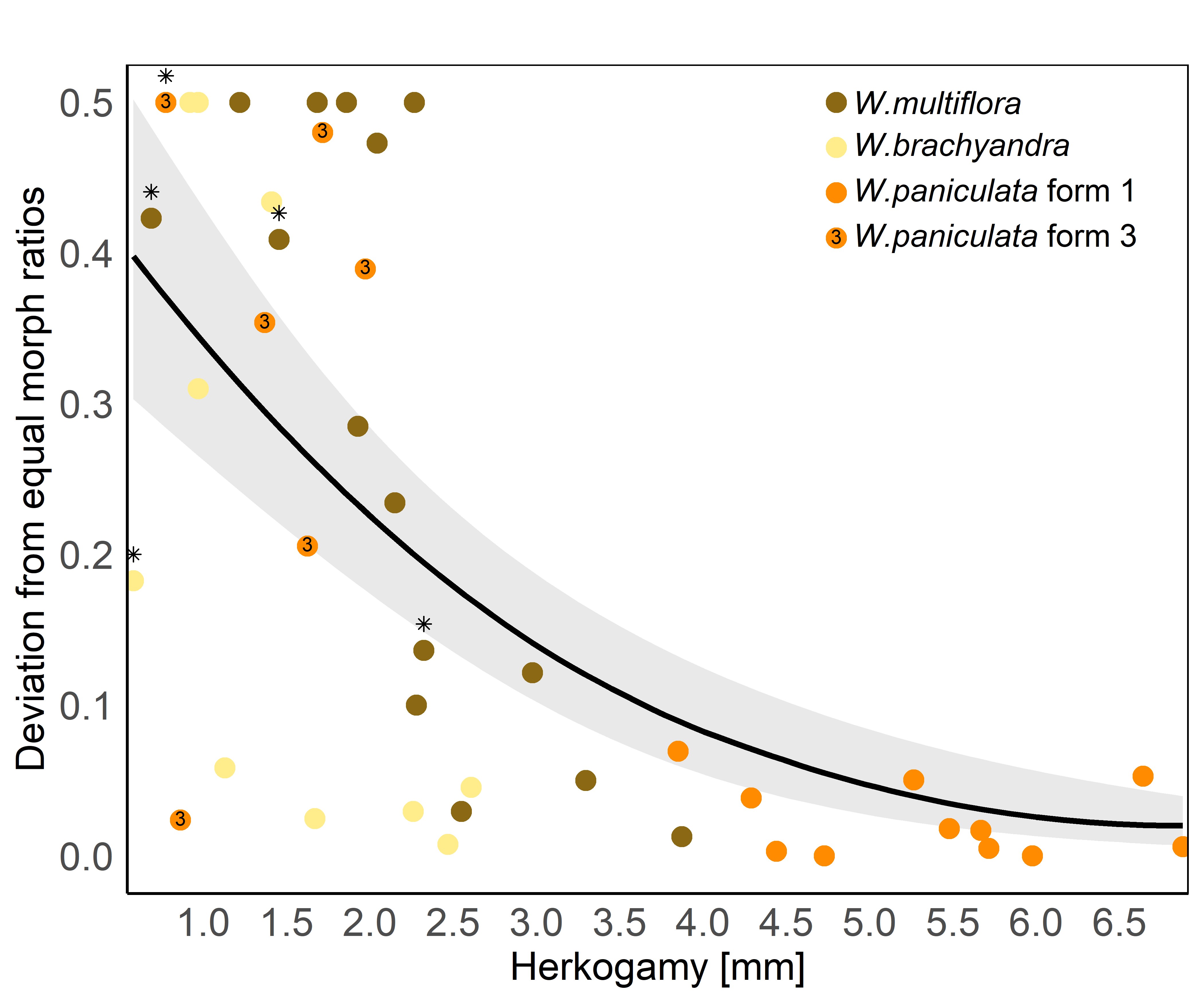
Some Wachendorfia populations have biased morph ratios. This is especially common in populations with low herkogamy (= the distance between the stigma and the nearest anther). In the absence of pollinators, plants with lower herkogamy are able to self-pollinate more easily.
When the plants reproduce via selfing, there is no disassortative pollen movement and no negative frequency-dependent selection. Thus, one morph can become more common or even take over the entire population.