Floral trait evolution
Flowers of different plant species often differ in their traits, such as colour, texture, orientation, shape or anther structure. These traits can have important consequences for plant reproduction and interactions with pollinators, antagonists and the abiotic environment. These interactions in turn shape the selection pressures that drive the evolution of flowers.
Ultraviolet colouration
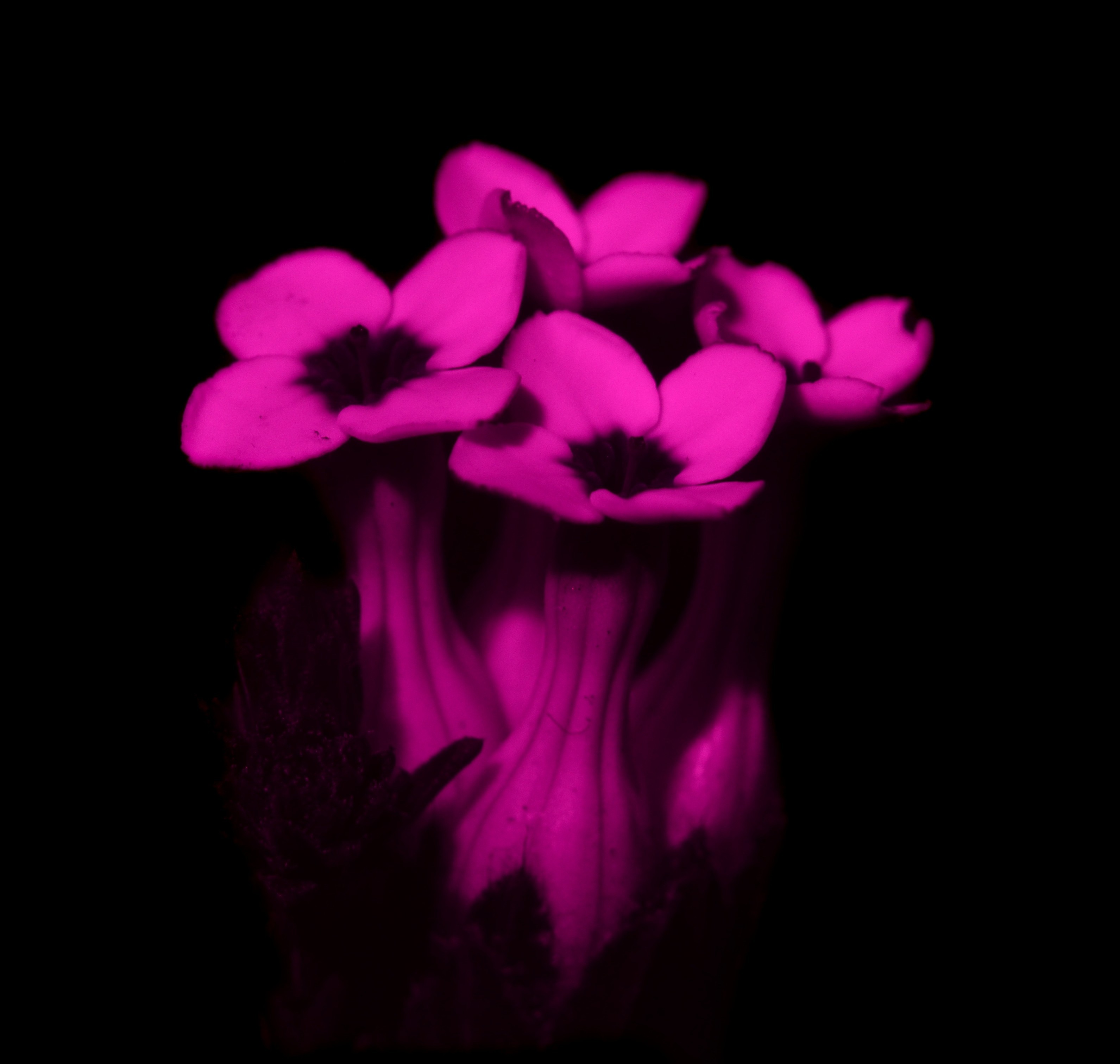
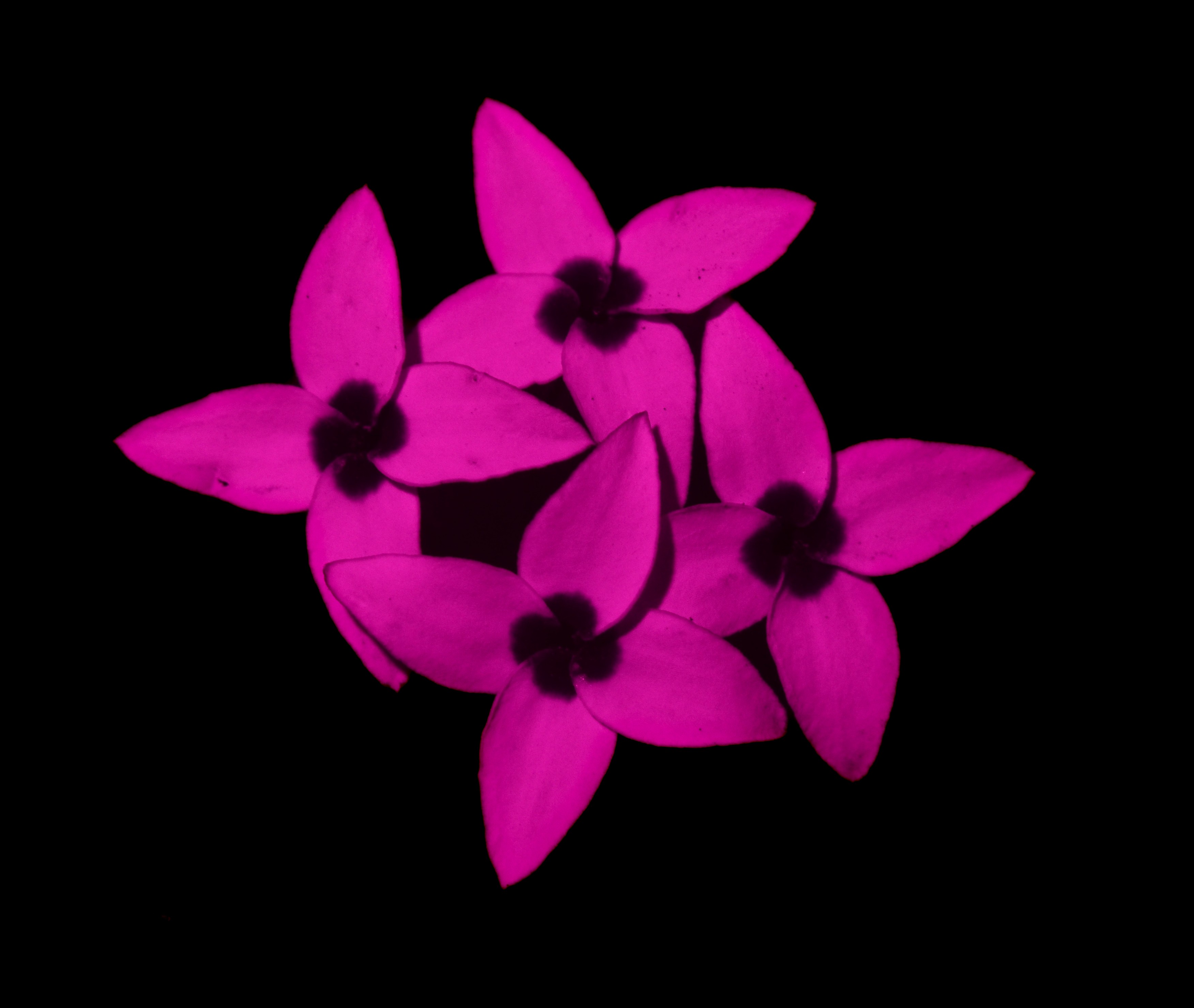
Humans cannot see ultraviolet (UV) light, but some animals can. While most flowers have pigments that absorb ultraviolet (UV) radiation and protect them just like sunscreen, some Erica flowers instead reflect UV. They might be pollinated by animals that are attracted to it.
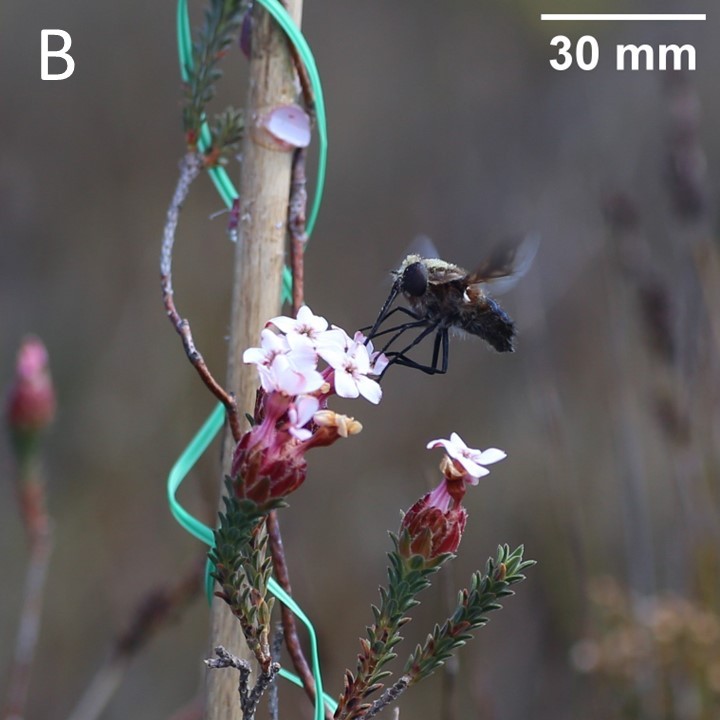
Bee-pollinated ericas normally don’t reflect UV. But all Erica species pollinated by long-tongued flies and 17% of sunbird-pollinated ericas reflect UV.
Long-tongued flies are specialized on drinking nectar from flowers and are important pollinators in South Africa. These flies can see UV and it is an important signal for them to visit flowers. When UV is artificially removed from the flowers, the flies stop visiting them and without visits the flowers produce no seeds.
Sunbirds can also see UV, however they have no innate preference for it. But when UV-reflecting flowers have more nectar, the birds prefer visiting them.
Stickiness
Some Erica species have sticky flowers. They can even be so sticky that little insects get stuck to them and die. This could make them less attractive to pollinators, but at the same time it could also help to prevent nectar robbing.
Nectar robbing is when an animal that isn’t the legitimate pollinator pierces a hole in the flower and steals nectar without pollinating it. This damages the flower and takes nectar away from the actual pollinators. Nectar robbing is especially common in bird-pollinated flowers, which often produce high volumes nectar. The nectar also attracts insects like bees and ants. But because these insects have short tongues, they cannot reach the nectar legitimately and resort to biting holes at the base of the corolla. However, the stickier the flowers of an Erica are, the lower the risk of having their nectar robbed.
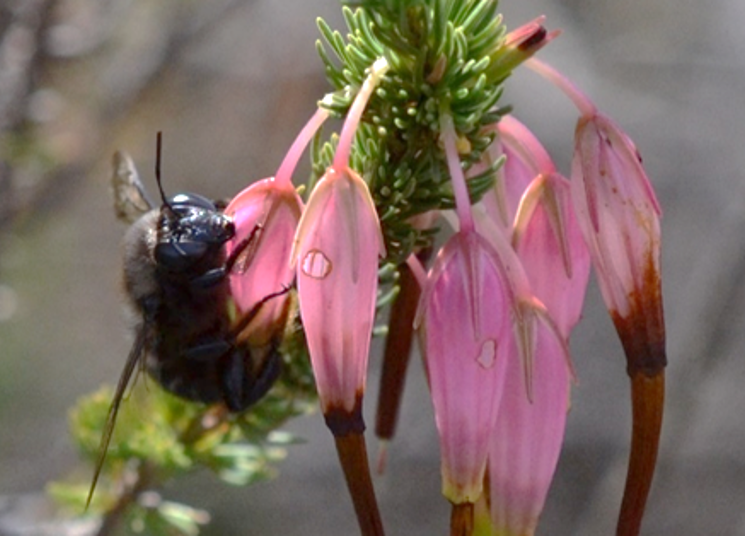
Flower orientation
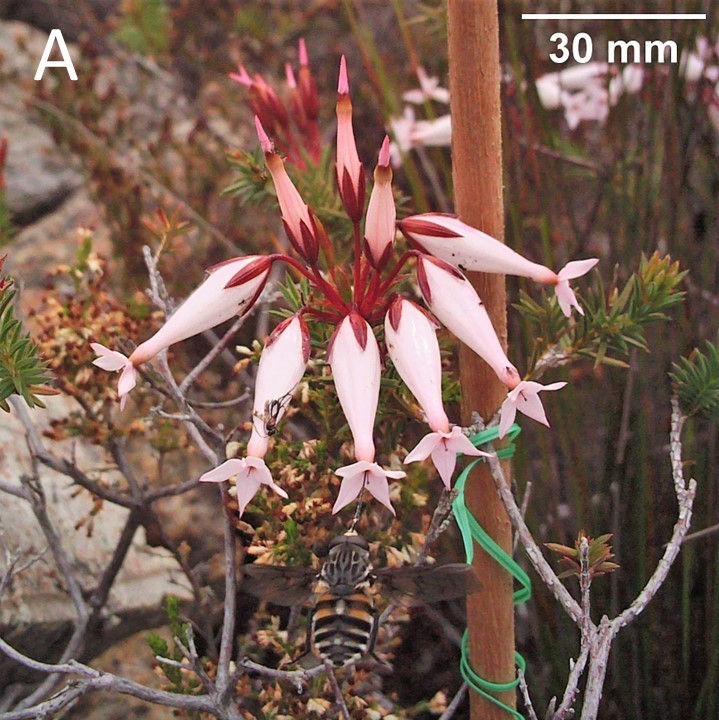
Flowers can differ in their orientation (upwards, sideways, downwards). This can be a result of interactions with the abiotic environment, e.g. downward orientation can protect nectar and pollen from rain. But it could also be the result of interactions with different pollinators. An example for this are nectar-feeding long-tongued flies, which have evolved in two families – Tabanidae and Nemestrinidae. Tabanidae have a fixed forward-pointing proboscis, which means they are restricted to visiting flowers orientated sideways. Nemestrinidae, on the other hand, can also swivel their proboscis downwards, allowing them to forage from a wider range of flower orientations.
In the closely related species Erica shannonea and Erica ampullacea flower orientation has even contributed to reproductive isolation. Erica shannonea points sideways and has a longer corolla. It is pollinated by a tabanid fly with a long tongue. Erica ampullacea, on the other hand, has upright flowers that are slightly shorter and is pollinated by a nemestrinid fly with a matching tongue. The tabanid fly cannot visit E. ampullacea because it cannot swivel its proboscis downwards, and the nemestrinid fly cannot visit E. shannonea because its tongue is too short.